
Importance of Financial Ratios
Financial ratios measure the relationship between two or more components of a financial statement. They are effective when looking at trends over analyzed periods of time, comparing to industry standards and conducting fundamental analysis. Financial ratios measurements help the credit union determine comfort in the credit risk.
The ratios are calculated using the financial statements (i.e., company and compiled statements), debt schedule(s), proformas, appraisal (if applicable) and tax returns provided.
Balance Sheet
A balance sheet’s liability section details out the total debts owed by a business. Some of the ratios will require knowing the monthly and/or annualized payments of these debts. Unfortunately, most company’s balance sheets don’t footnote these debt repayment terms, which then requires the Borrower/Business to provide a debt schedule; one is requested in our loan application.
As shown below, a balance sheet’s liability section details out the total debts owed by a business. Some of the ratios will require knowing the monthly and/or annualized payments of these debts. Unfortunately, most company’s balance sheets don’t footnote these debt repayment terms, which then requires the Borrower/Business to provide a debt schedule; one is requested in our loan application.
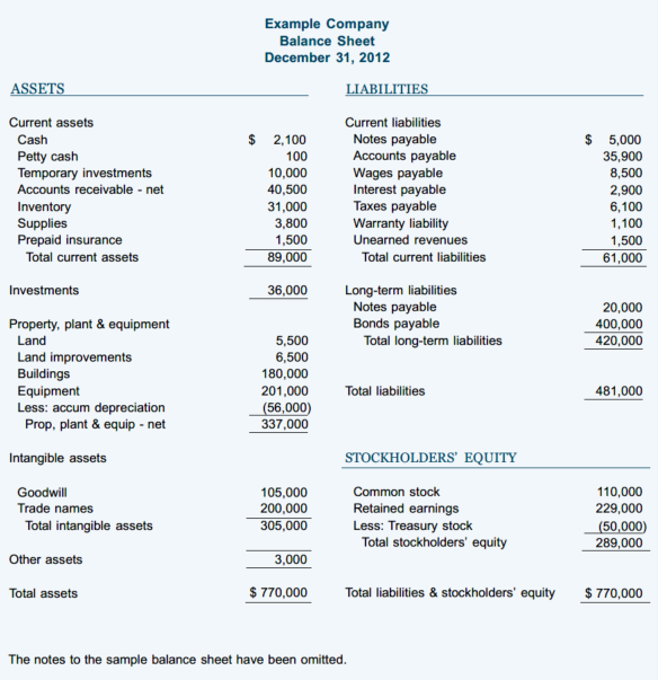
Most of the ratios used for the liquidity, profitability, and leverage ratios on the next slides will come from the most recent balance sheet provided
Liquidity Ratios
|
Current Ratio Measures a company’s ability to pay short-term debt obligations, or those due within one year. It tells investors and analysts how a company can maximize the current assets on its balance sheet to satisfy its current debt and other payables. |
Current Assets / Current Liabilities A ratio of 1.00 indicates that the company’s debts due in a year or less are greater than its assets. |
| Quick Ratio The quick ratio is an indicator of a company’s short-term liquidity position and measures a company’s ability o meet its short-term obligations with its most liquid assets. |
Quick Assets / Current Liabilities |
Quick Assets = Cash Equivalents + Marketable Securities + Accounts Receivable
If the above is not available, then use
Current Assets – Inventory – Prepaid Expenses